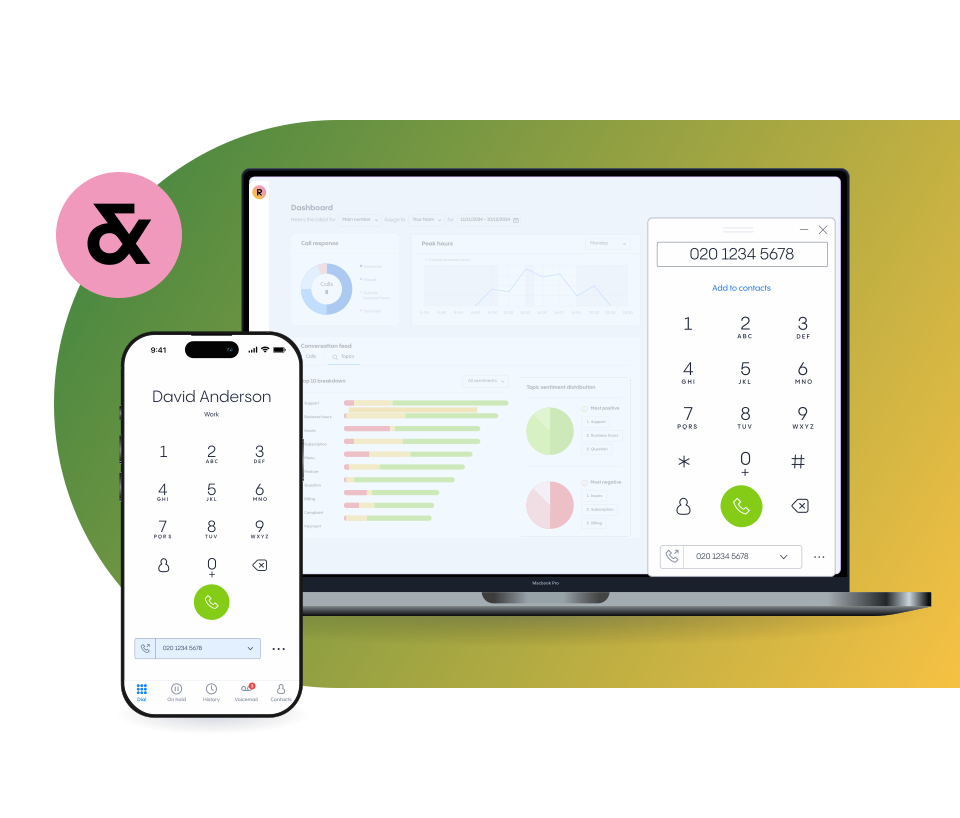
VoIP (Voice over Internet Protocol) converts your voice into digital data and sends it over the internet, instead of through traditional copper phone lines. It's become the standard way most UK businesses handle calls, but it's not without trade-offs. Here's a straightforward look at both sides.
VoIP stands for Voice over Internet Protocol. Instead of using a traditional landline, VoIP turns your voice into digital data packets and sends them over your internet connection. You can make and receive calls from a desk phone, a computer, or an app on your mobile, as long as you have an internet connection.
Lower costs
VoIP typically costs significantly less than a traditional phone line, especially for long-distance and international calls. There's no need for expensive on-site hardware like a PBX system, and most providers charge a simple monthly fee per user instead.
Mobility
Because VoIP works through an app rather than a physical handset, you can make and take business calls from anywhere with an internet connection, on your laptop, tablet, or phone. Your business number goes wherever you go, rather than staying tied to a desk.
Easy scalability
Adding or removing users is usually a matter of a few clicks in an account dashboard, not an engineer visit or new cabling. This makes VoIP well suited to businesses that grow, shrink, or work seasonally.
Advanced features included
Most VoIP plans bundle in features that would cost extra with a traditional phone line: voicemail-to-email, call forwarding, call recording, and integrations with tools like CRMs and calendars.
Keep your number when you move
Your VoIP number isn't tied to a specific building or address, so you can keep the same number even if your business relocates.
Internet dependency
VoIP calls need a stable internet connection. If your broadband goes down, calls made through a desk phone plugged into your office network go down with it.
How Rinkel handles this differently: because Rinkel runs entirely through an app rather than a fixed desk phone tied to your office network, calls can still go through over mobile data if your office broadband drops, since the app works from any phone with a signal, not just from hardware wired into one internet connection.
Power outages
Traditional landlines can keep working during a power cut because they're powered down the phone line itself. VoIP relies on your router and, in the case of a desk phone, mains power, so a power cut can take out your calls unless you have a battery backup or can shift to a mobile app.
Call quality issues
VoIP call quality depends on your internet connection. A slow or congested connection can cause lag, jitter, or choppy audio. This is usually fixable with a decent broadband connection and a router that prioritises voice traffic, but it's worth knowing about before you switch.
Emergency call location
Because VoIP numbers aren't tied to a fixed address in the same way traditional lines are, emergency services may not automatically know your exact location on a VoIP call. It's important to keep your address details up to date with your provider so this can be passed on if needed.
Should you switch from a landline to VoIP?
With the UK's copper landline network being phased out entirely by 31 January 2027, most businesses will need to move to a digital phone service either way. VoIP is one option, but given its trade-offs above, it's worth knowing it isn't the only one.
For most small businesses and freelancers, though, the disadvantages above (internet dependency, power outages, emergency call location) are exactly what make plain VoIP feel risky for something as important as staying reachable. That's where Rinkel fits in: you get a professional business number that works on the mobile you already carry, without the internet dependency that causes most of VoIP's downsides in the first place.