Just started out on your own? You're in good company — autumn is one of the most popular times of year to launch a business. As a new business owner, you've already got plenty on your list. The good news: it's quicker and easier to sort than you might think.
In this guide we run through what to set up when you're starting out, with a bit of extra attention on something that's easy to overlook but counts from day one: how customers reach you.
1. Registering your business
The first official step is registering your business. Depending on how you set up — as a sole trader or a limited company — you'll register with HMRC for Self Assessment, or with Companies House if you're forming a limited company. You choose a business name and set out what you'll actually be doing.
Sort this first, because a lot of other things — like a business bank account — will ask for it. If you register a limited company, you'll get a company registration number; if you're VAT-registered, you'll have a VAT number for your invoices too.
2. Getting your admin and finances in order
Not the most exciting part, but one of the most important. A few things to sort early on:
- A business bank account, so you keep business and personal money separate.
- Accounting software or an accountant to keep on top of your invoices and tax return.
- A simple invoice template with your business and VAT details on it.
You don't need everything perfect straight away. Start with the basics and build it out as your business grows. That saves you money — and headaches — early on.
3. Being reachable, professionally, from day one
Here's a trap a lot of new business owners fall into. You put your personal mobile on your first quote, on your website, on your business card. It makes sense — it's the easy option. But that hands customers your personal number, and it's hard to walk back later.
Because once customers have your mobile, that number keeps doing the rounds. You get calls over dinner, at the weekend, on holiday. And switching to a separate number gets harder with every month that passes.
Why a business number makes the difference
With a separate business phone number you keep work and personal apart from the start. Customers ring your business number; friends and family ring your personal one. You see who's calling and decide for yourself whether to pick up.
And there's more. A business number gives your company a professional look, especially when you're just starting out. A proper business number on your quote lands more seriously than a mobile, and that first impression often decides whether a customer trusts you.
How to sort it, without a second phone
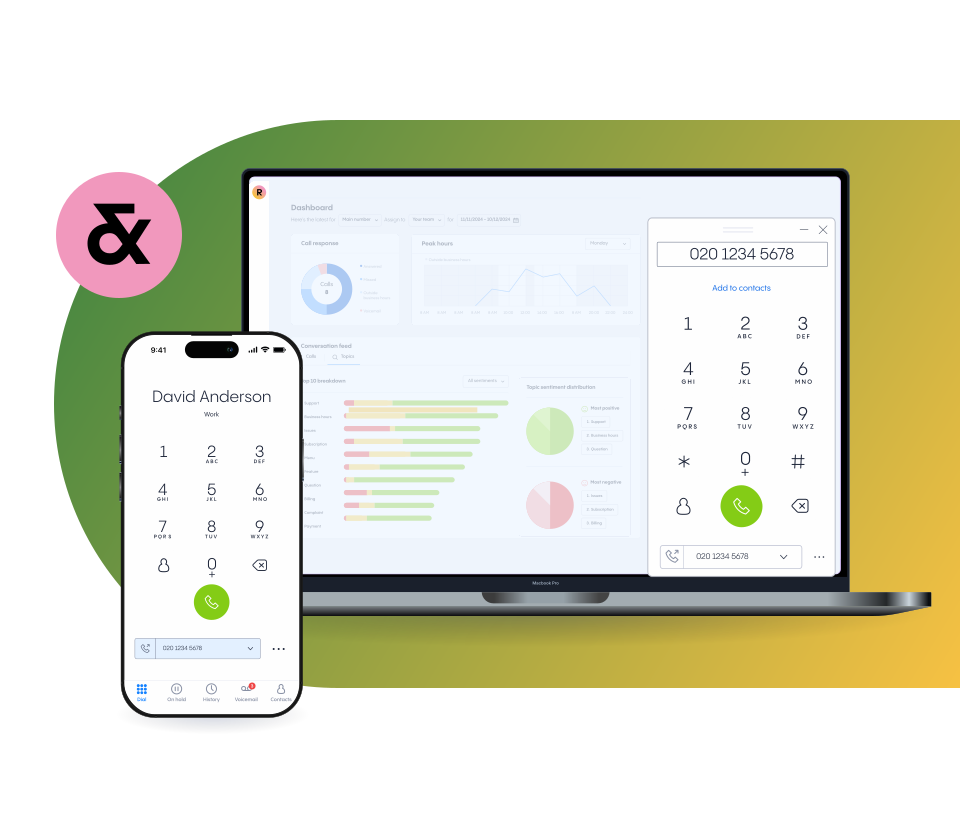
You don't need to buy an extra phone or SIM for it. With Rinkel you get a business number that simply works through an app on your own mobile. You make and take calls on the phone you already have, while your personal number stays private. There's more about that on our page about a landline number for mobile.
Work mainly in one area? Choose a local number. Work across the UK? A national 0330 number fits better. You set it up yourself in a few minutes, with no technical knowledge needed.
4. Putting yourself on the map
You're registered, you're reachable — now for the customers. A few things that help:
- A simple website or one-pager where people can find you and see what you do.
- A free Google Business Profile, so you show up when someone nearby searches.
- A profile on the social channel where your customers actually are — not necessarily all of them at once.
Start small and pick what suits you. You don't need to be active on every platform to get found.
Starting a business is enough work on its own. How customers reach you doesn't need to be another worry. With a business number on your own mobile, you come across professionally from your very first call, and keep work and personal neatly apart. Your first number is included with your Rinkel plan, and if it's not for you within 30 days, you'll get your money back.