Your business number

Reachable anytime, anywhere within 3 minutes. Use one number on any device and manage everything yourself in the mobile app or your browser.
Your business number

Reachable anytime, anywhere within 3 minutes. Use one number on any device and manage everything yourself in the mobile app or your browser.


Rinkel_Hero-Switch-between-devices-UK.svg

Your business number

Reachable anytime, anywhere within 3 minutes. Use one number on any device and manage everything yourself in the mobile app or your browser.

Inbound vs outbound calls: what's the difference?


Jolijn Buitelaar
update: 12 October 2026 | read time: 5 minutes

Inbound and outbound calls are simply about who picks up the phone first. An inbound call is one a customer makes to you. An outbound call is one you make to them. The distinction matters because each type needs a different approach, and often different tools, to handle well.


What is an inbound call?

An inbound call is any call a customer or prospect makes to your business. It's reactive by nature, since the caller has already decided to get in touch, usually because they need help, have a question, or want to place an order.

Examples of inbound calls:

  • A customer asking about an order or delivery
  • A client requesting technical support
  • Someone calling to book an appointment
  • A complaint or piece of feedback

What is an outbound call?

  • An outbound call is any call your business makes to a customer or prospect. It's proactive: your team decides to make contact, usually with a specific goal in mind, like a sale, a follow-up, or an update.
  • Examples of outbound calls:
  • A sales call to a potential customer
  • A follow-up after a quote or consultation
  • A reminder about an upcoming appointment
  • A callback after a missed inbound call

Do you need different tools for inbound and outbound calls?

For a call centre with dozens of agents, yes, inbound and outbound calls are often handled with different tools: automated call distribution and IVR menus for inbound, and auto-dialers or call scripts for outbound.

For a small business or sole trader, this is usually far simpler. You don't need separate systems for each direction. A single business number that works on your mobile can handle both: customers ring your business number for inbound calls, and you make outbound calls showing that same number as your caller ID, so clients always see a consistent, professional number either way.

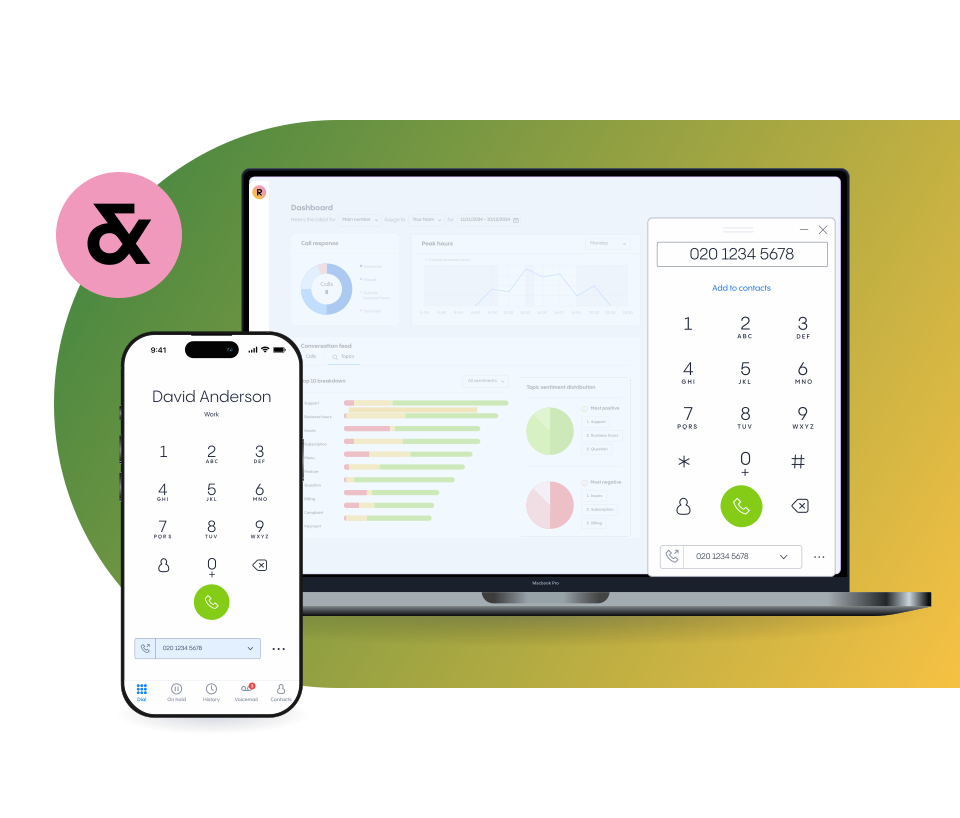
With Rinkel, your business number works on your mobile for both directions, without needing call centre software or a dedicated team to manage it.

Are there rules around outbound calls in the UK?

Yes. Outbound calls, particularly for marketing or sales, are governed by the Privacy and Electronic Communications Regulations (PECR). In short:

  • You generally need consent before making unsolicited marketing calls
  • The Telephone Preference Service (TPS) lets people opt out of marketing calls, and businesses must respect this
  • Calls are typically restricted to reasonable hours, generally between 8am and 9pm

Inbound calls aren't restricted in the same way, but businesses still need to handle any customer data collected during a call in line with GDPR.

Inbound vs outbound calls FAQ

Outbound calls are calls a business makes to a customer or prospect, usually for sales, follow-ups, appointment reminders, or surveys. The business initiates the call, rather than the customer.

This is a different use of the same terms, referring to software rather than phone calls. An inbound API call is a request your system receives from an external service, while an outbound API call is a request your system sends out to another service. It's unrelated to inbound and outbound phone calls, though the "who initiates it" logic is similar.

An inbound call is a call a customer or prospect makes to your business, usually to ask a question, get support, or place an order.

Neither is inherently easier, they require different skills. Inbound calls need strong listening and problem-solving, since you're responding to whatever the caller brings up. Outbound calls need confidence and persistence, since you're initiating a conversation the other person didn't necessarily expect.